Material
Carbon steel
Good candidate when distortion, speed, or repeatability is limiting MIG/TIG output.
Send: grade, thickness, joint photo, max gap.
Use this page to check material, industry, joint, and process fit before sending a drawing or sample. The real decision still depends on thickness, gap, inspection target, and cycle time.
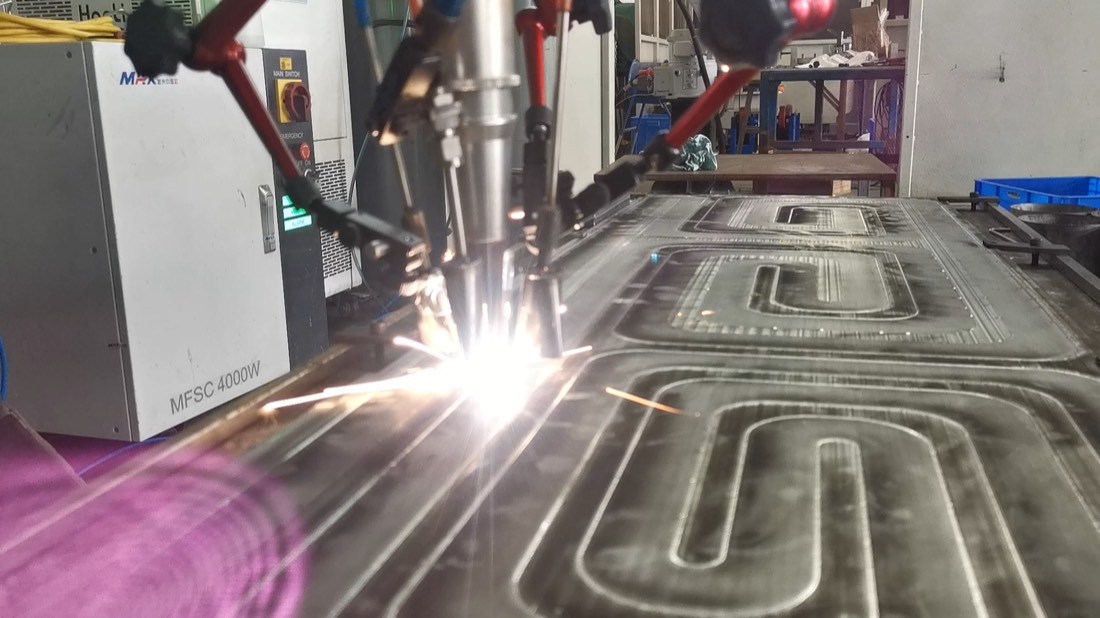
Good candidate when distortion, speed, or repeatability is limiting MIG/TIG output.
Send: grade, thickness, joint photo, max gap.
Strong fit for sealed assemblies, food equipment, exhaust parts, and cosmetic welds.
Send: 304/316 grade, leak or appearance requirement.
Needs review for surface condition, wire feeding, shielding, and deformation risk.
Send: alloy, temper, coating, fixture photo.
High-value parts need tight shielding control and inspection-led parameter development.
Send: grade, wall thickness, shielding standard.
Reviewed carefully because reflectivity and heat conduction change power demand.
Send: copper type, joint design, electrical or leak target.
Feasibility depends on the material pair, intermetallic risk, filler strategy, and joint layout.
Send: both materials, thicknesses, section view.
Cooling plates, trays, busbars, frames, sealing, distortion, and repeatable fixturing.
Useful input: leak target, material stack, volume.
Private review is best because materials, inspection, shielding, and disclosure limits vary.
Useful input: standard, material, wall thickness.
Small welds, cleanliness, repeatability, and low heat input around precise parts.
Useful input: weld length, sealing or cosmetic standard.
Best when stainless appearance, reduced polishing, and leak prevention matter.
Useful input: visible face, post-polish step, thickness.
Miniature weld size, thermal sensitivity, clamping, accuracy, and cycle time.
Useful input: heat-sensitive zones and tolerances.
Part families with volume, takt-time pressure, distortion issues, or manual variation.
Useful input: annual volume, target cycle, current process.
Long seams, thick sections, large access windows, and hybrid welding candidates.
Useful input: plate thickness, seam length, gap range.
No filler wire. Best when the joint is consistent and fit-up is tight.
Check first: gap, thickness, strength target.
Use when added material helps bridge gaps, shape the bead, or improve strength.
Check first: wire material, gap range, bead size.
Best for thicker parts or fit-up reality that bare laser welding cannot tolerate.
Check first: thickness, penetration, seam length.
Edge preparation, gap consistency, and inspection target drive the welding route.
Send: edge photo, max gap, section target.
Robot access angle, weld leg, clamping, and wire feeding decide feasibility.
Send: corner geometry and required weld size.
Useful for sheet assemblies when clamping and surface requirements are controlled.
Send: overlap width, layer thicknesses, visible face.
Reviewed around material pair, thickness transition, weld length, and downstream forming.
Send: material pair, thickness pair, forming target.
Useful when the same robotic cell can support holes, slots, or contours near weld work.
Send: hole size, tolerance, edge requirement.
Useful for pipes, tubes, curved parts, or large structures that need 3D contour access.
Send: 3D model, cut path, material, part photo.
Send the material, thickness, joint photo, target cycle time, and inspection requirement. We will recommend service validation, system planning, or a simpler route.