Shenzhen Essen 2026: robot welding is moving from showcase to production.
Shenzhen Essen 2026 showed a clear shift: robot welding is no longer only a display of automation hardware. Buyers now need proof on real parts, fixture logic, seam tracking, wire-fill options, and a practical route from trial weld to production cell.
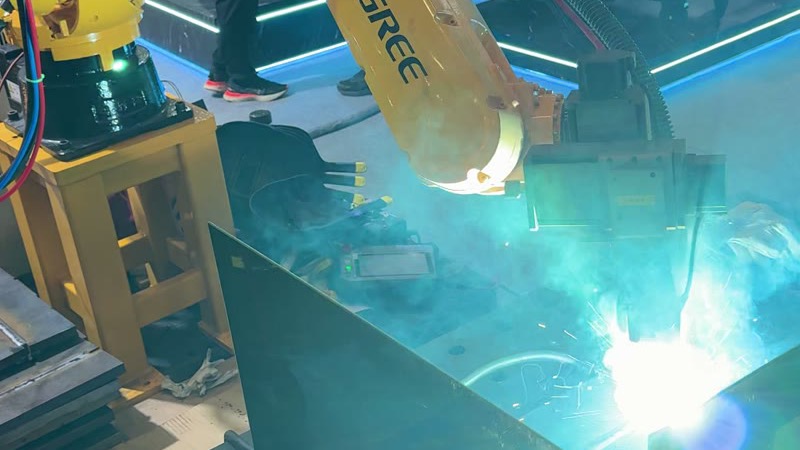
The 2026 Beijing Essen Welding & Cutting Fair in Shenzhen made one thing clear: robot welding is moving away from showroom demonstrations and toward practical production decisions.
For fabricators, the question is no longer simply, "Can a robot weld?" The better question is:
Can this system prove my weld, on my part, with my fit-up tolerance, my inspection requirement, and my production target?
That is the difference between an impressive machine demo and a useful robotic welding project.
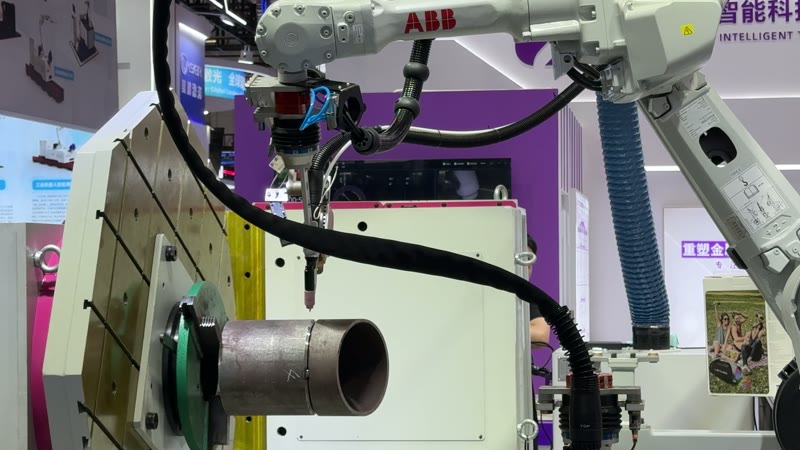
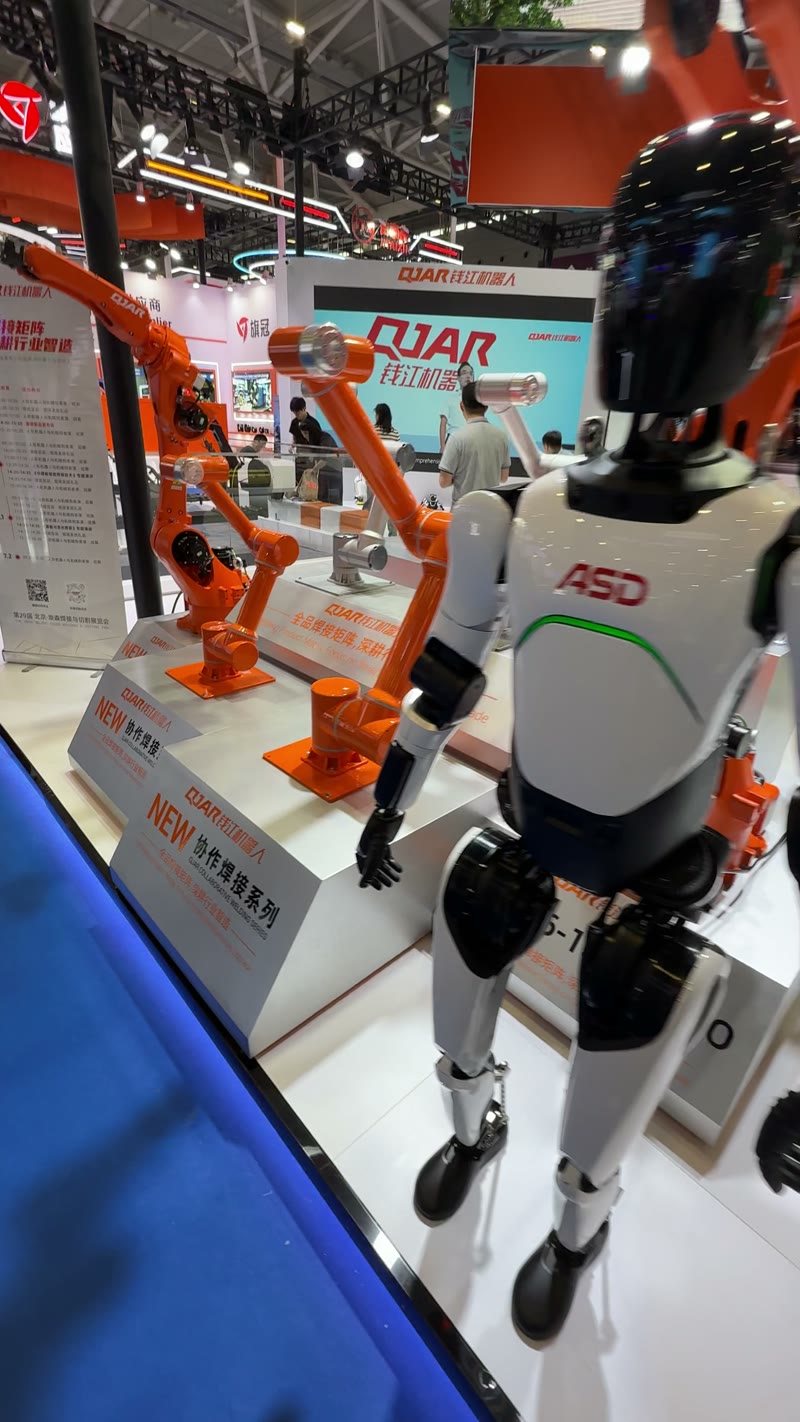
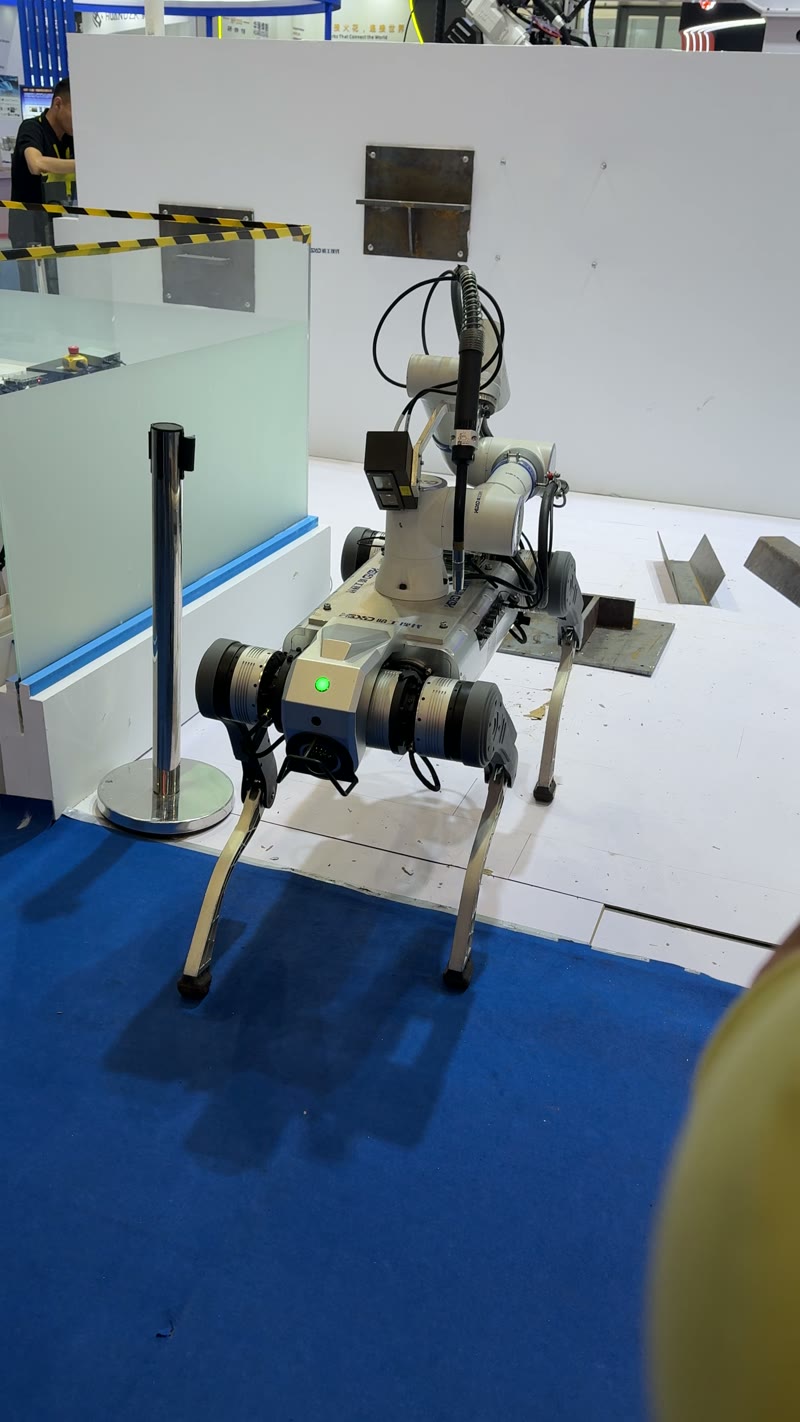
What stood out at Shenzhen Essen 2026
1. Collaborative welding cells are becoming easier to approach
The market is clearly trying to lower the entry barrier for small and medium workshops. More suppliers are presenting compact welding stations, guided programming, modular carts, and pre-matched robot plus welding packages.
That is good news, but it also creates a new risk: a system can look simple on the show floor while still failing on a real part with inconsistent gap, poor clamping, or difficult seam access.
Do not buy the robot first. Prove the weld path first.
Before choosing robot reach, laser power, wire feeding, or seam tracking, the part should decide the route.
2. No-code and no-teach welding is becoming a serious buying topic
Offline programming, visual seam recognition, drag teaching, and simplified operator interfaces are now central to the sales conversation. This matters because the shortage is not only welding labor. Many factories also lack engineers who can program complex robotic paths every day.
But easier programming does not remove the need for welding process judgment. A simplified interface still depends on joint design, fixture repeatability, material condition, gap control, welding speed, shielding gas, and inspection standard.
3. Seam tracking is moving from optional feature to production risk control
Laser welding is sensitive to seam position and fit-up. For long seams, heat distortion, or inconsistent assemblies, seam tracking can become the difference between a successful process and a system that only works on ideal samples.
A buyer should ask:
- Is seam tracking needed for this joint?
- Is it pre-scan, real-time tracking, or both?
- Can it handle surface reflection and welding light?
- How is tracking data coordinated with robot motion and laser output?
- What happens when the seam is outside tolerance?
4. Wire-fill laser welding is becoming more important
Autogenous laser welding works well when fit-up is tight and the joint is designed for it. Many production parts are not that perfect.
Wire-fill laser welding helps when the project needs:
- a fuller bead profile
- gap tolerance
- cosmetic seam appearance
- strength in a fillet or lap joint
- more tolerance for upstream assembly variation
At the same time, adding wire also adds coordination work. The wire feeder, laser power, travel speed, torch angle, and shielding gas all need to work as one process.
5. The most useful system is not always the most expensive system
At a trade show, package offers can be distracting. Low price alone does not make a good welding system. High price alone does not guarantee success either.
The real evaluation should include:
- part size and robot reach
- weld length and required cycle time
- material and thickness
- gap and fixture condition
- penetration and appearance target
- inspection method
- operator skill level
- spare parts and support
- training and documentation
- export and service path
What buyers should send before asking for a robot welding quote
If you are evaluating robotic laser welding, do not start with only a requested laser power or robot brand. Send the evidence that lets the system be judged properly.
- part drawings or photos
- material grade
- material thickness
- joint type
- weld length
- current welding method
- target production volume
- quality or inspection requirement
- current pain point: distortion, labor, speed, leakage, grinding, rework, or appearance
- fixture photos, if available
- sample parts, if the project is serious
With that information, SkyFire can recommend whether the project should begin with robotic laser welding, wire-fill laser welding, laser-arc hybrid welding, seam tracking, or a simpler service-production trial.
SkyFire's position: proof before purchase
Shenzhen Essen 2026 confirmed that the robot welding market is getting broader, faster, and more accessible. That is positive. It also means buyers need a stronger filter.
SkyFire's approach is to start with the part:
- Review the part evidence.
- Identify the likely welding process.
- Validate seam access and fixture risk.
- Trial weld when needed.
- Recommend service production or a turnkey robotic cell.
The goal is not to sell the largest system first. The goal is to choose the route that reduces production risk.
Send the part evidence before buying the system.
Send part photos, drawings, material, thickness, weld length, and target volume. SkyFire will review whether robotic laser welding, wire-fill laser welding, seam tracking, or a turnkey workstation is the right route.